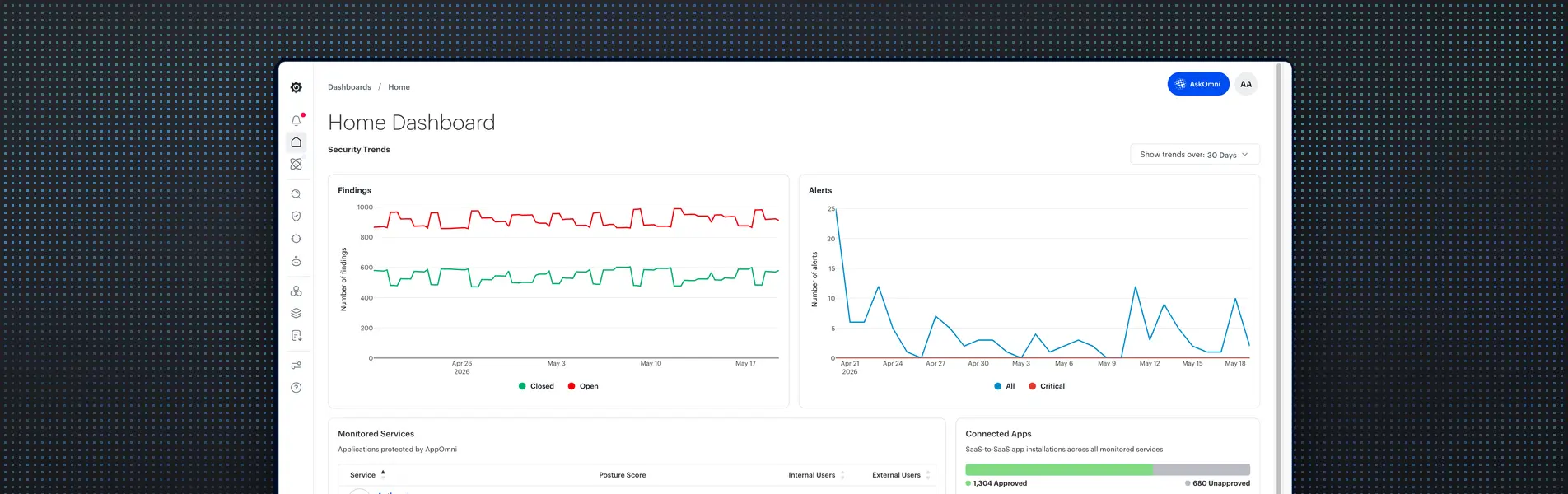
AppOmni
Design System Rebuild
Led AppOmni's design system rebuild from agency engagement through in-house ownership, bringing design and engineering onto a shared system.
Overview
AppOmni is a SaaS security platform. I began this project as a senior technical project manager at Savage Bureau, the agency hired to redesign the app and develop its design system. When Savage Bureau closed at the end of 2024, I joined AppOmni directly as a contract design system manager, continuing the work through 2025.
The challenge
Savage Bureau was brought in to redesign AppOmni's app and build a design system around it. The scope of that system wasn't clearly defined at the outset, and early work focused on a Figma library to support feature design. As the project progressed, it became clear that success required more than a library: design and engineering needed shared components, consistent tokens, and a reliable process for taking changes from Figma into the product.
The obstacles
- An evolving scope: Early client direction emphasized creating a library of components for feature design work, often without an existing use in the app. The Figma library and shipped product grew further apart before the team reoriented toward auditing and consolidating existing components and patterns.
- Shifting design priorities: New design leadership brought a stronger focus on engineering collaboration and a Figma-to-Storybook workflow, but also revisited previously approved designs, adding rework while the process was still taking shape.
- Team and business transitions: Layoffs, Savage Bureau's closure, and the unexpected departure of key design leadership changed the team dynamic and ownership of the effort.
My role
I initially led Savage Bureau's project team as senior technical project manager. After the agency closed, AppOmni brought me on as a contract design system manager and individual contributor to maintain continuity and carry the work forward. My role grew to encompass:
- Design system ownership: Managed priorities and maintained the Figma library, balancing system improvements with the design team's ongoing feature needs.
- Individual contributor: Audited existing components, consolidated duplicates into shared components with only the variants needed, and designed new components and patterns for feature work.
- Engineering collaboration: Worked closely with engineers to introduce consistent design tokens and align Figma components with their built counterparts.
- Documentation and workflows: Documented components, patterns, and the processes for maintaining and extending the system.
- Advocacy and adoption: Used my hands-on feature work to build relationships with product managers, program managers, and engineers, many of whom weren't aware of the updated design system. I introduced them to the design system and demonstrated how it could support their work.
The outcome
By the end of 2025, the design system had full adoption across design and engineering. Redesigned primary navigation, data grids, and side panels improved patterns used throughout the app, supported by shared components, consolidated Storybook documentation, and consistent design tokens.
- Role
- Design System ManagerProduct DesignerProject Manager
- Client
- AppOmni
- Agency
- Savage Bureau
- Timeframe
- 2024–2025
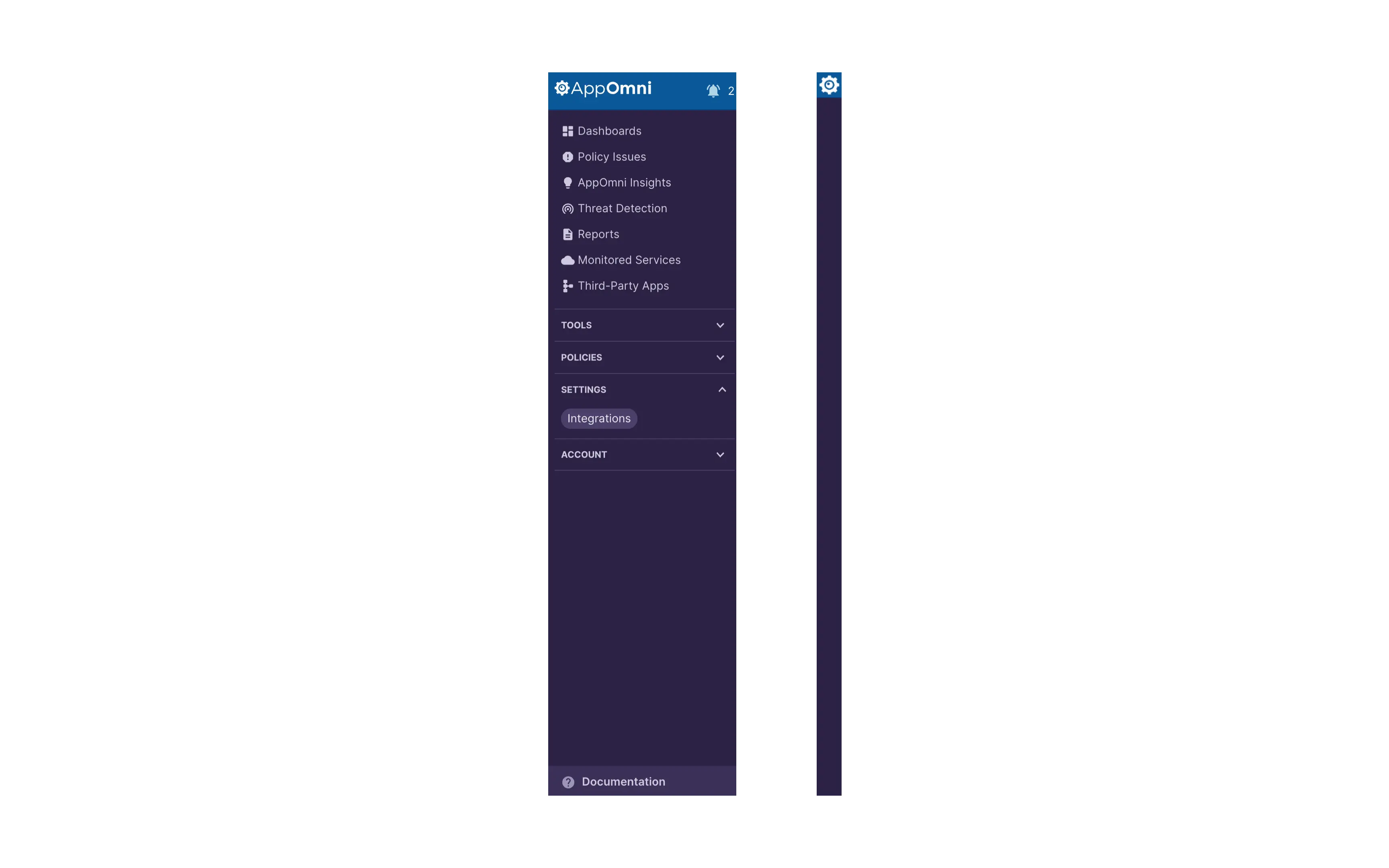
Primary navigation
Before
After
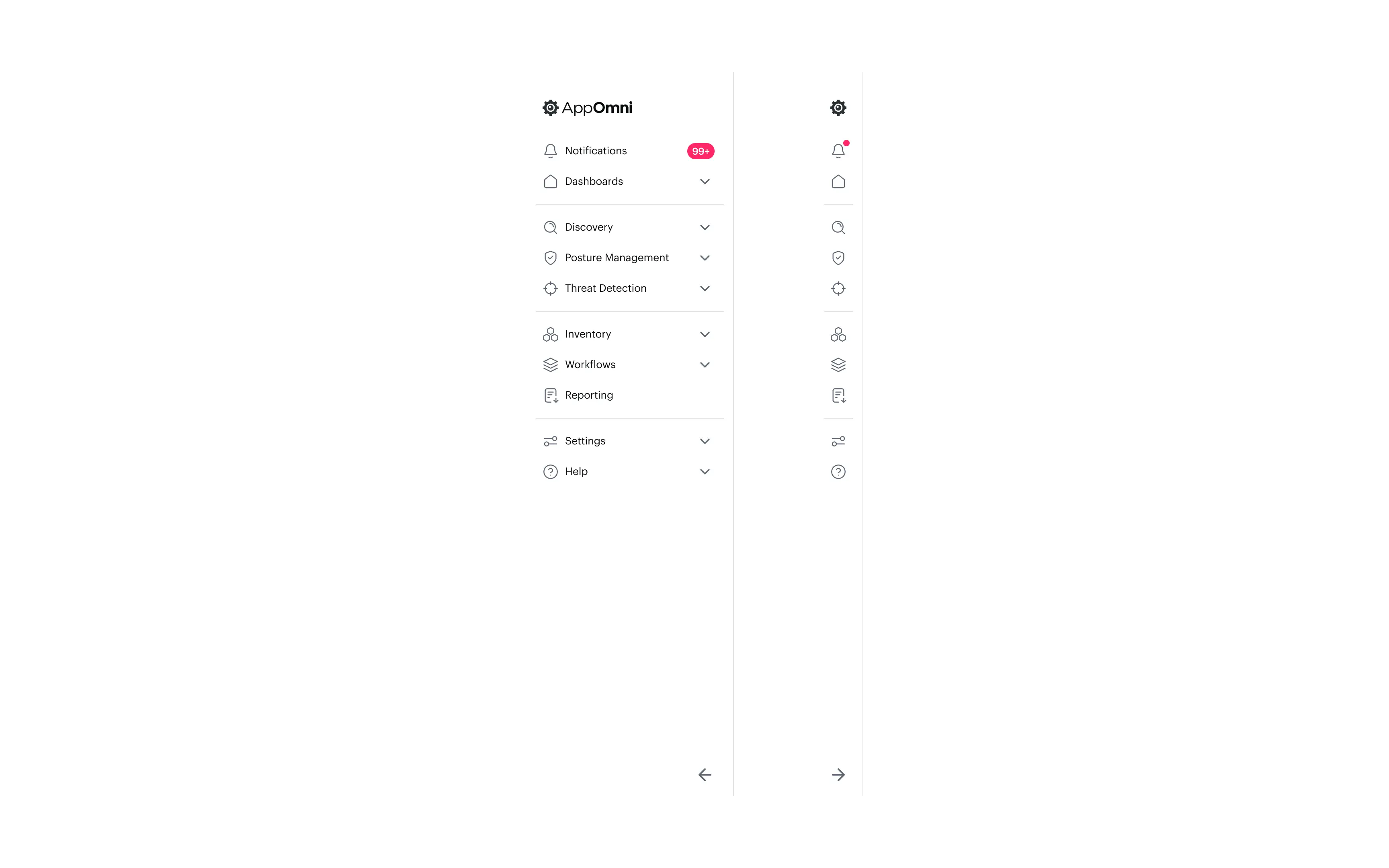
The original navigation and the redesigned version, each shown in default and collapsed states.
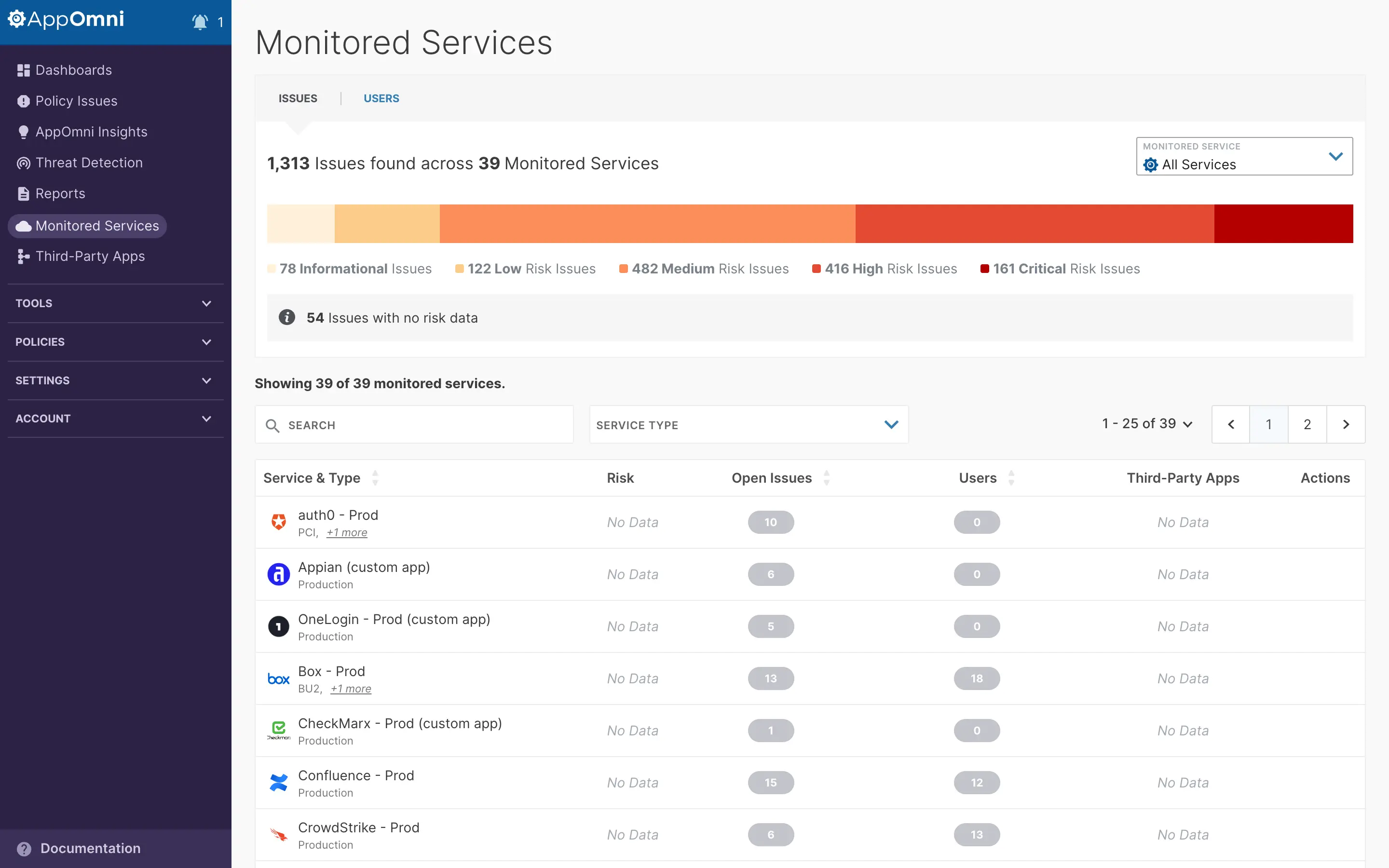
Data grids: Monitored Services
Before
After
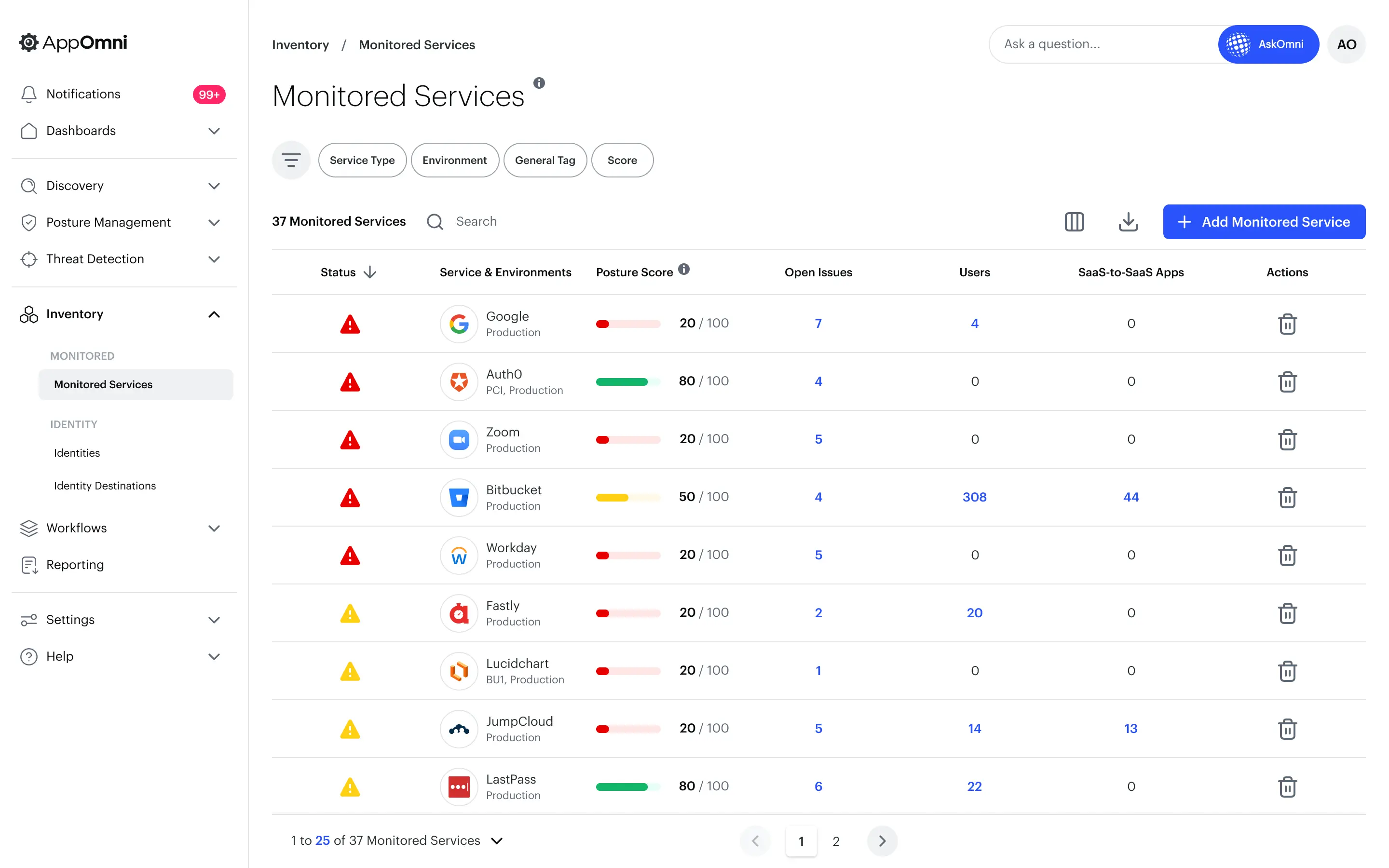
The original Monitored Services page and the version rebuilt with the redesigned data grid, page header, and filters.
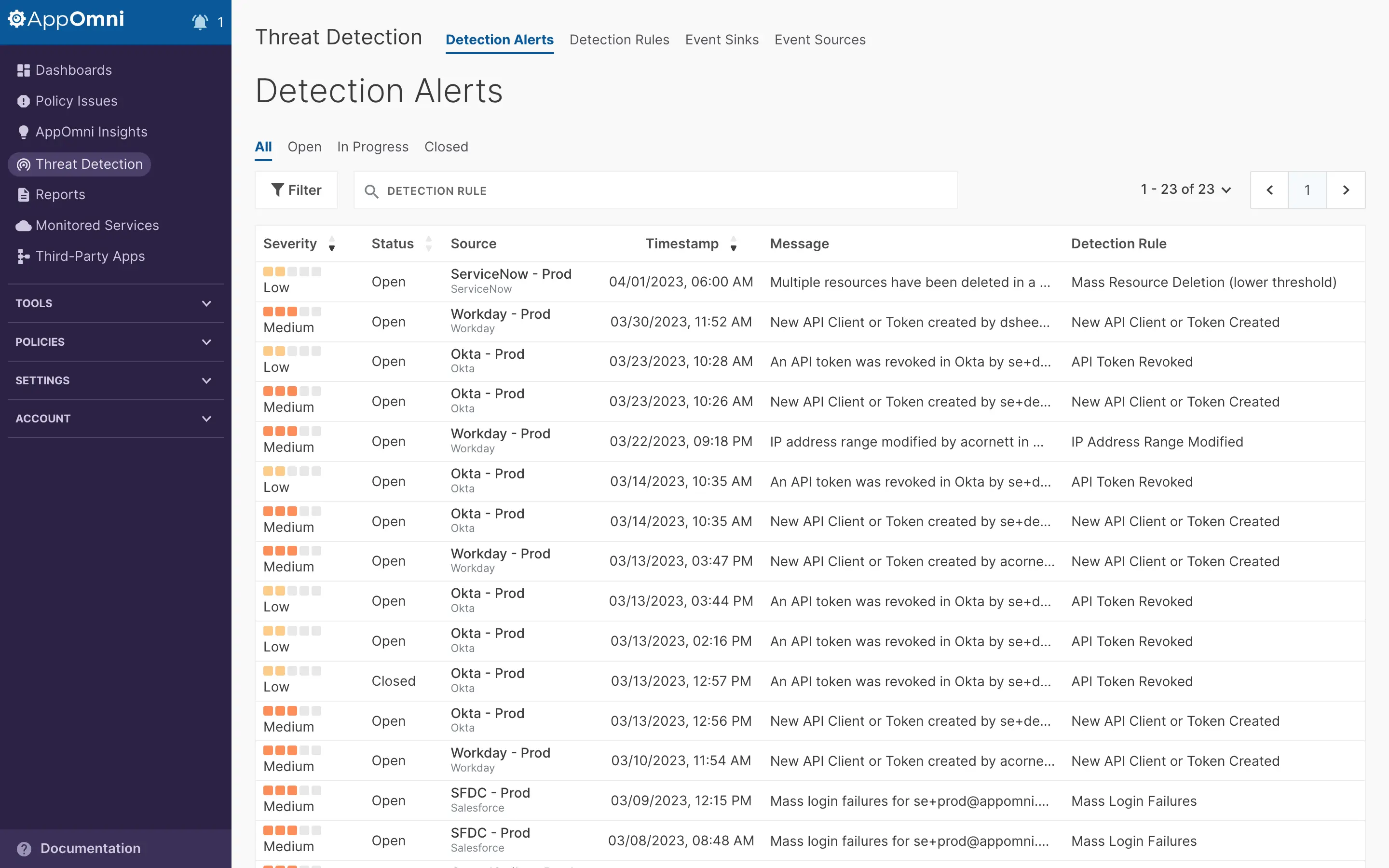
Data grids: Threat Detection
Before
After
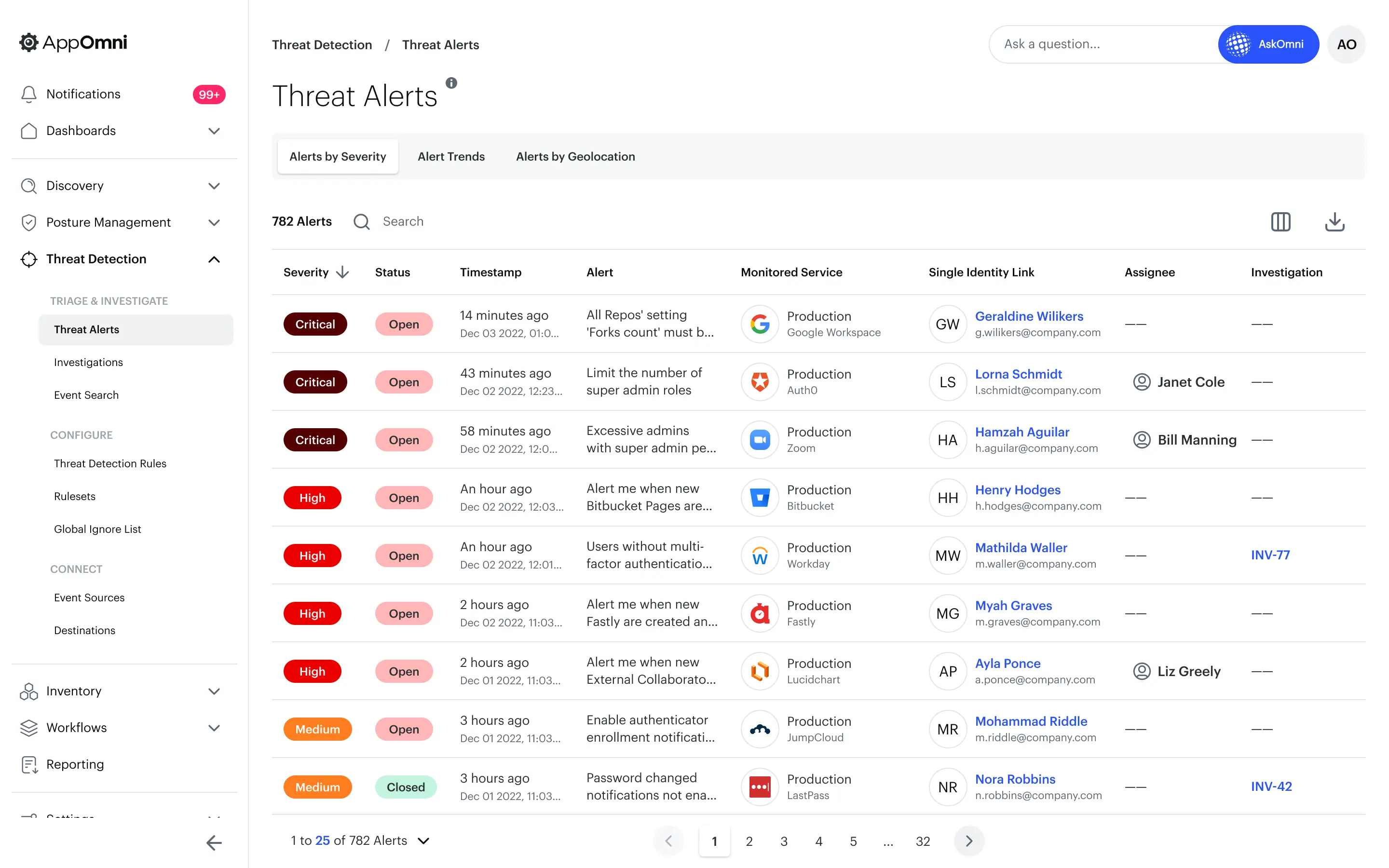
The original Threat Detection alerts page and the version rebuilt with the redesigned data grid.
Side panels: Pivot panels
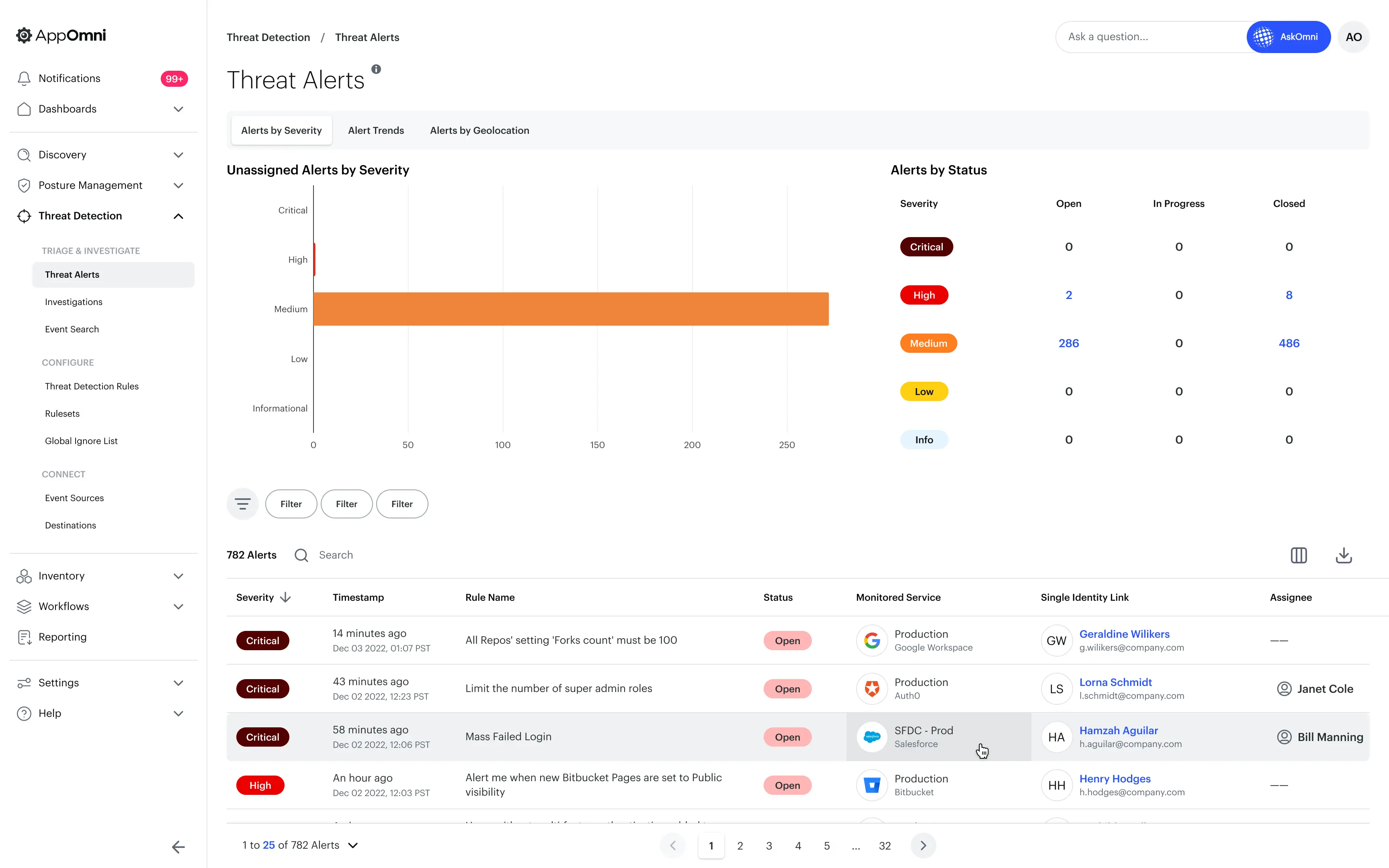
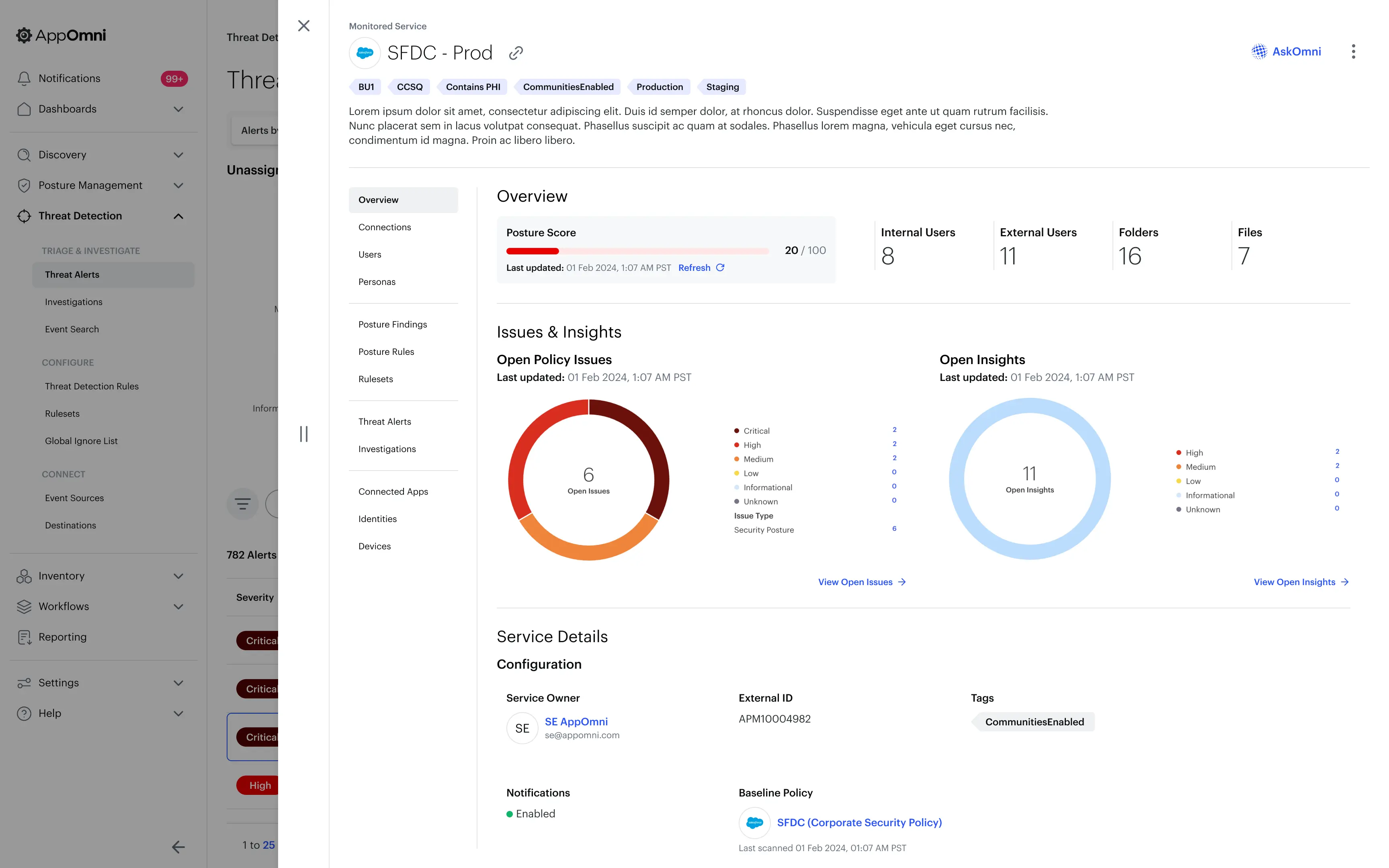
Selecting a monitored service in a table opens a pivot panel with related data, without leaving the page.
Side panels: Record detail panel
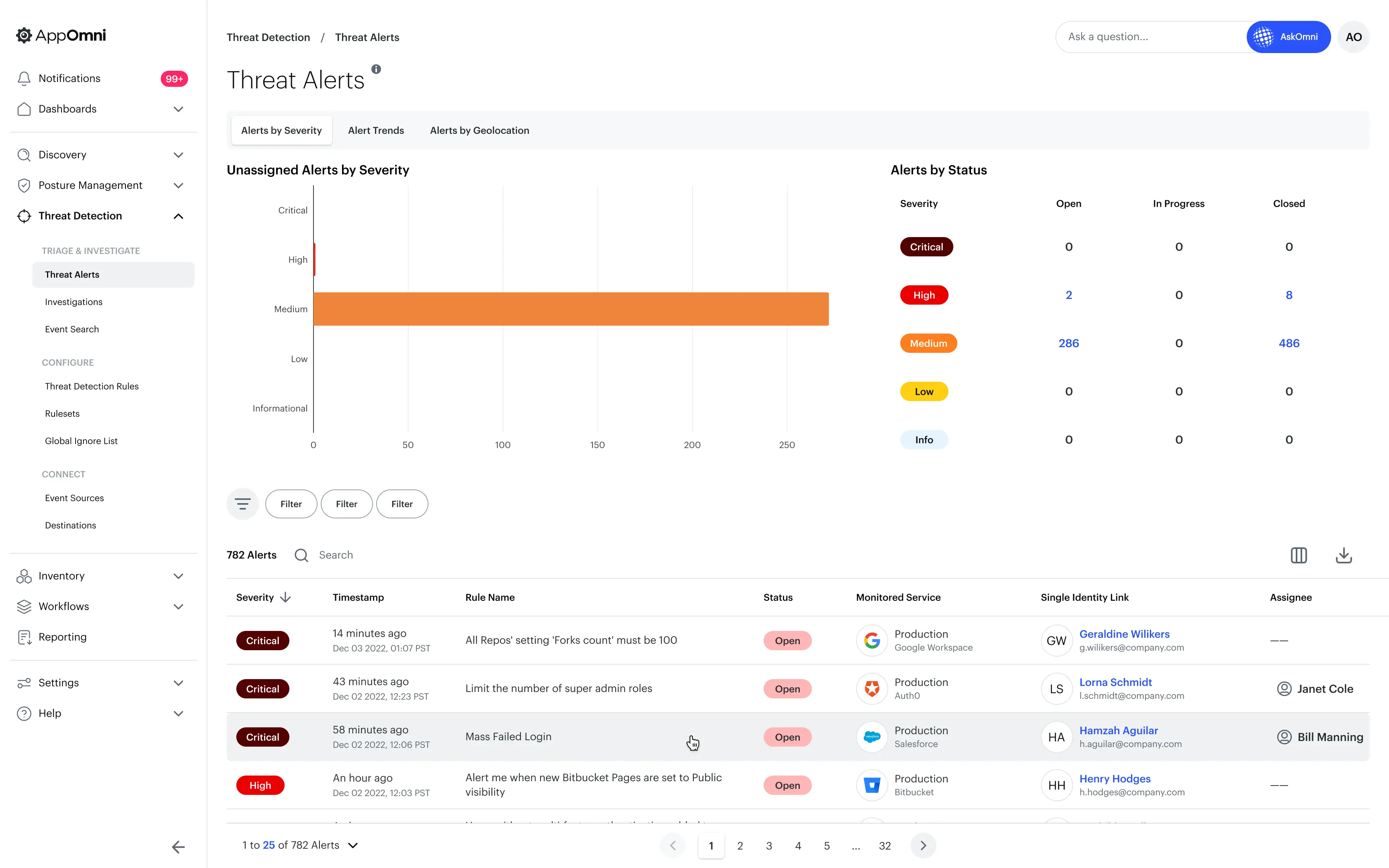
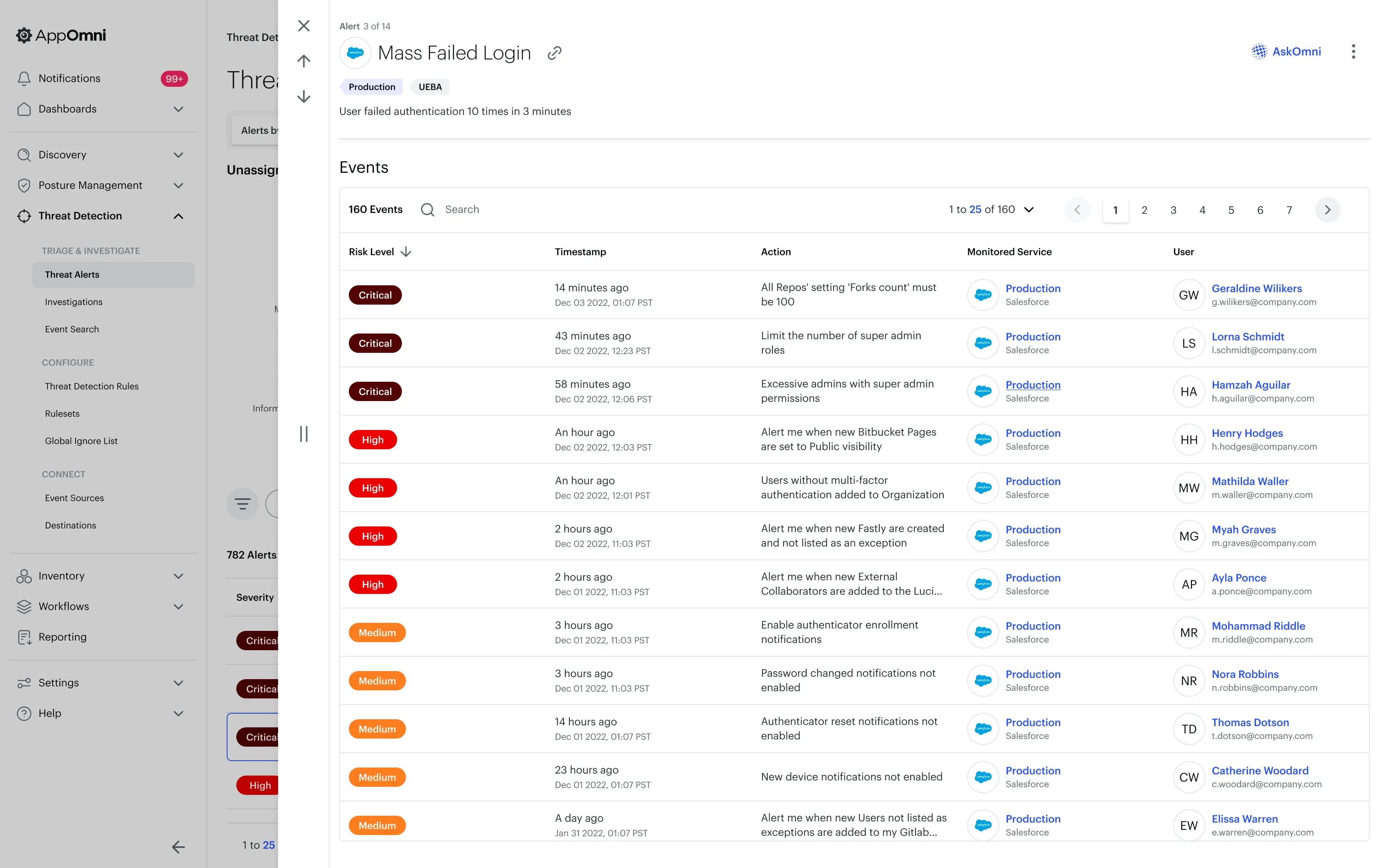
Selecting a row opens a detail panel with the full alert record and its events.