
Savage Bureau
Creative Production & Agency Ops
Designed and built the operating system for a growing creative agency while managing client projects day to day.
The agency
Savage Bureau was a boutique brand agency offering strategy, design, and software development. Most clients were commercial real estate firms that needed integrated marketing campaigns for their properties, including brand strategy, naming, brochures, marketing websites, short films, wayfinding, and environmental graphic design. We also worked with a variety of other companies providing more focused ad hoc design and development services.
The challenge
The agency was growing quickly and taking on more work than its systems could support. Client and project details had no central home, tasks were written inconsistently, and leadership had little visibility into team bandwidth.
Agency obstacles
- No single source of truth: Company, client, and project information was scattered and hard to find.
- Design and development friction: Developers often joined projects late, after key design decisions were made.
- Decision vacuums: Key decisions happened in Slack DMs and ad hoc working sessions, leaving no record of how or why they were made.
- Limited bandwidth visibility: Leadership couldn't see who had capacity, which made sales, project, and resource planning harder.
My role
Alongside managing client projects, I took the initiative to build out the agency's operations:
- Notion agency operating system: I pitched the partners on replacing our existing project management tool with a single source of truth for company, client, and project information. It included:
- A company wiki with hubs for creative, development, project management, and sales.
- Client and project templates linking contacts, design files, code repos, and other key resources.
- A task database for all in-flight projects, with views by person and by project.
- A client portal for status reports, core deliverables, and feedback.
- Design-to-dev process: I tightened how design and development worked together:
- Established a formal kickoff process and regular internal review cycles.
- Required at least one developer in every discovery, ideation, and design review.
- Centralized all internal feedback and logged key decisions in a Notion decision tracker.
- Created a task template so every ticket was focused and complete.
- Resource planning tool: I built a spreadsheet showing each person's weekly hours per project up to three months out. PMs updated it during the week, we reviewed it every Friday, and each Monday every team member got a Slack message with their hours, goals, and deliverables.
- Client projects: I actively managed multiple projects simultaneously, including:
- Integrated campaigns for Greystar, Shorenstein, and Kilroy Realty.
- Kilroy's multisite platform, which gave each of their 60+ properties a custom site for marketing and tenant needs.
- EcoOne's full rebrand, including logo, packaging, a Shopify site, an Amazon storefront, and photo and video shoots.
- Plus a range of smaller campaigns and ongoing support for other clients.
The outcome
Project planning and execution clearly improved, and team members said the added structure gave them more agency and let them focus on their work instead of chasing lost details. The efficiencies we gained let a small team take on more client work while raising the quality of what we delivered.
- Role
- Senior Technical Project Manager
- Company
- Savage Bureau
- Timeframe
- 2021–2024
Company wiki
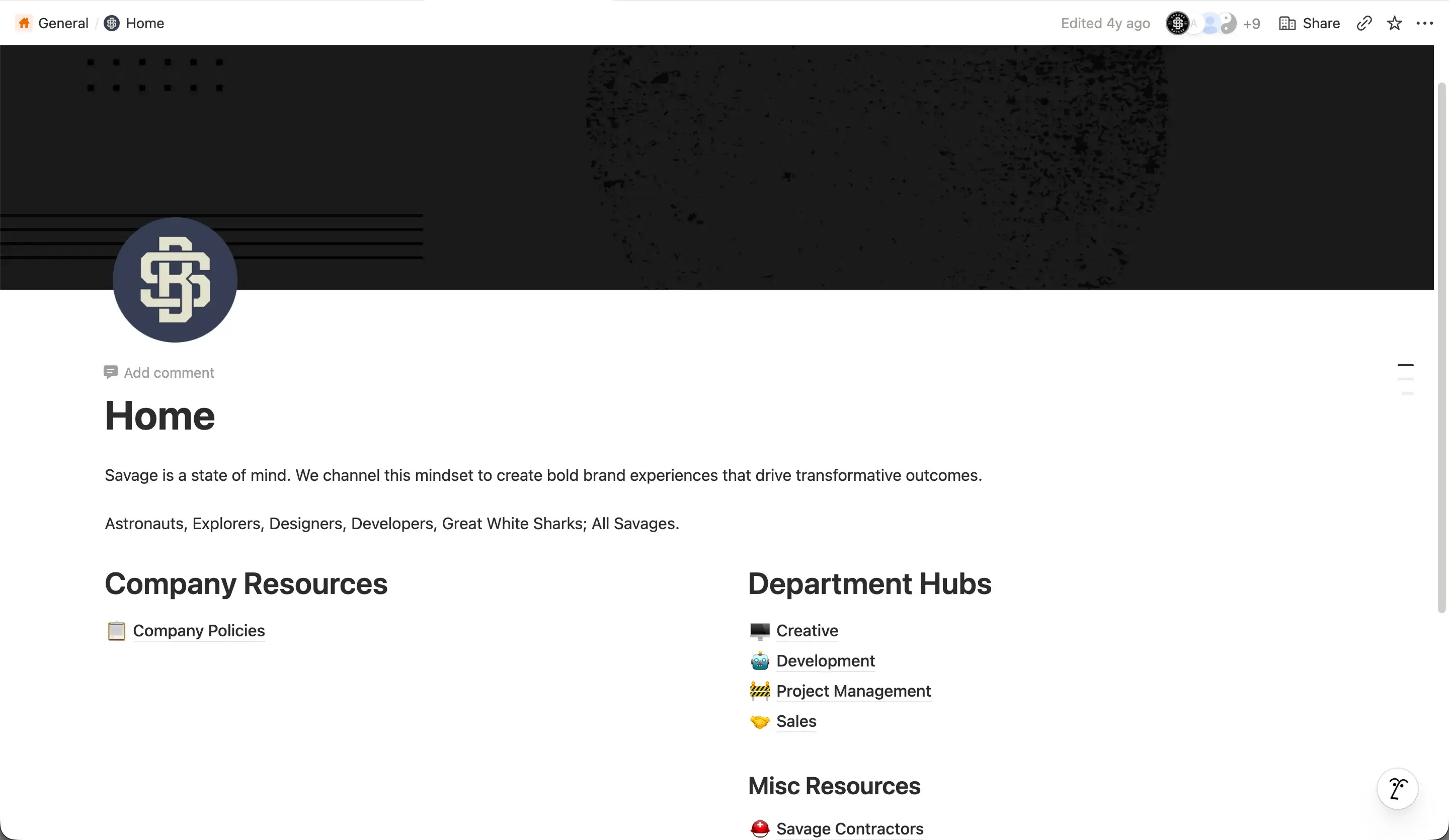
An early iteration of the company wiki homepage.
Clients database
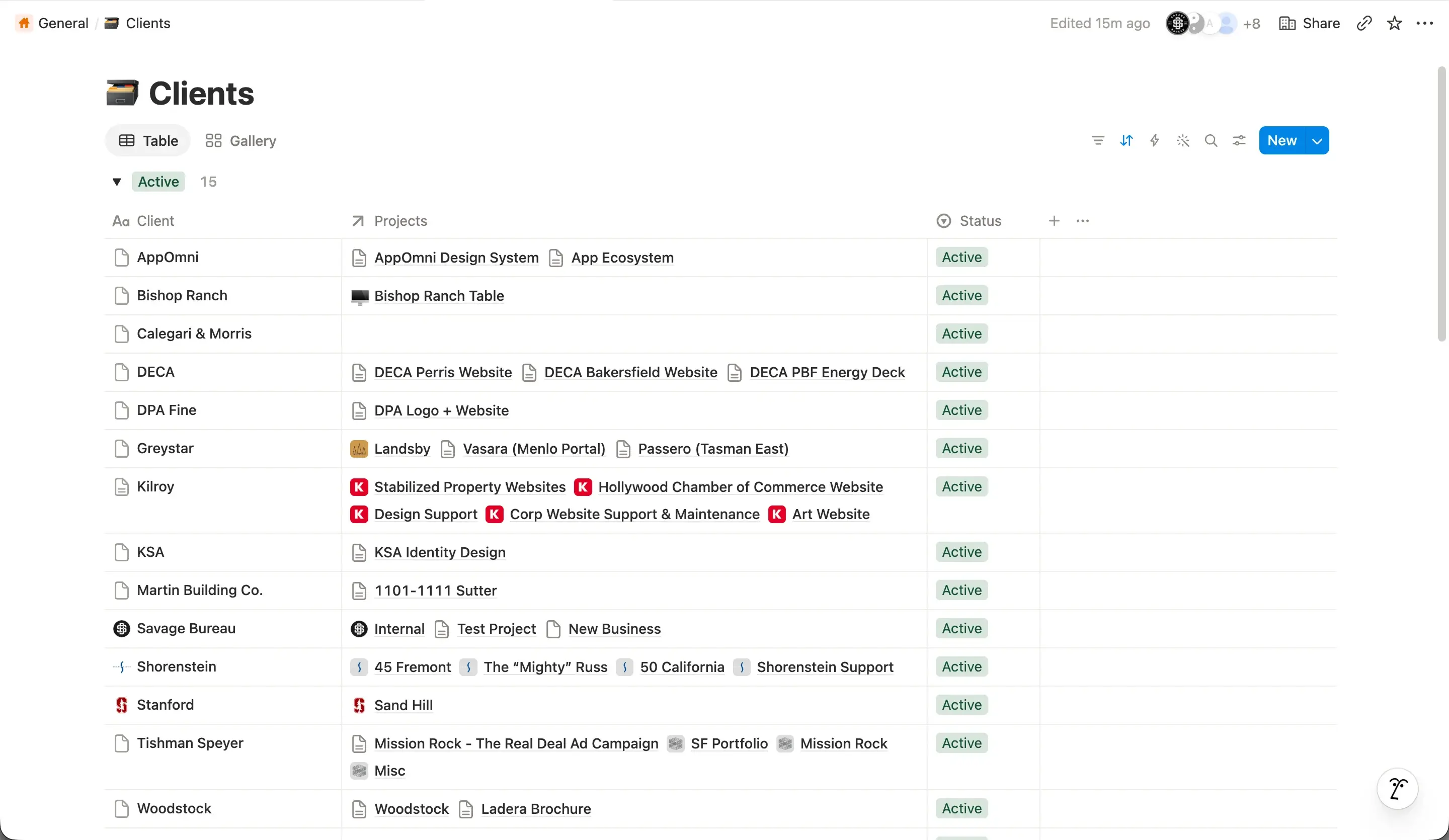
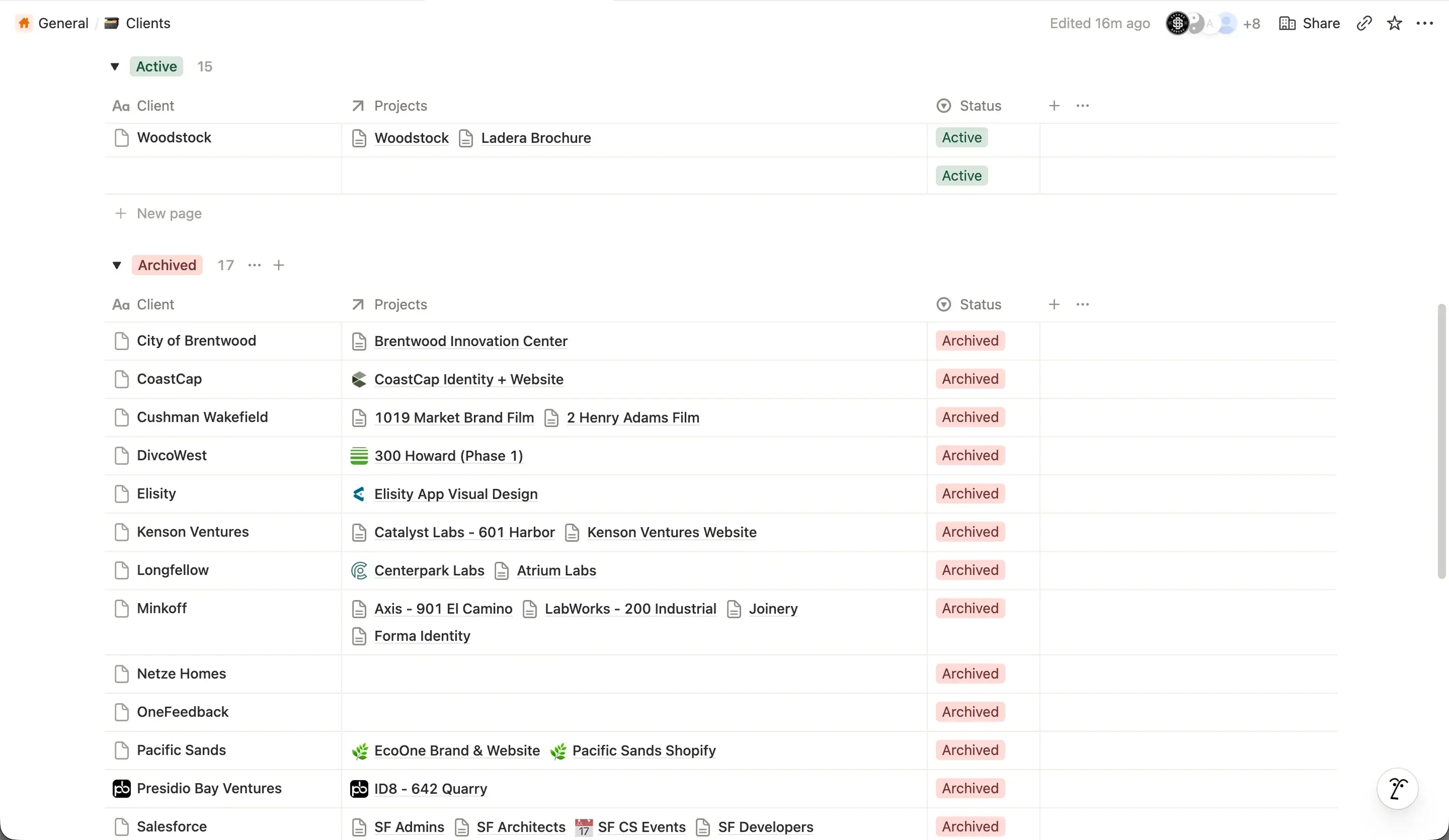
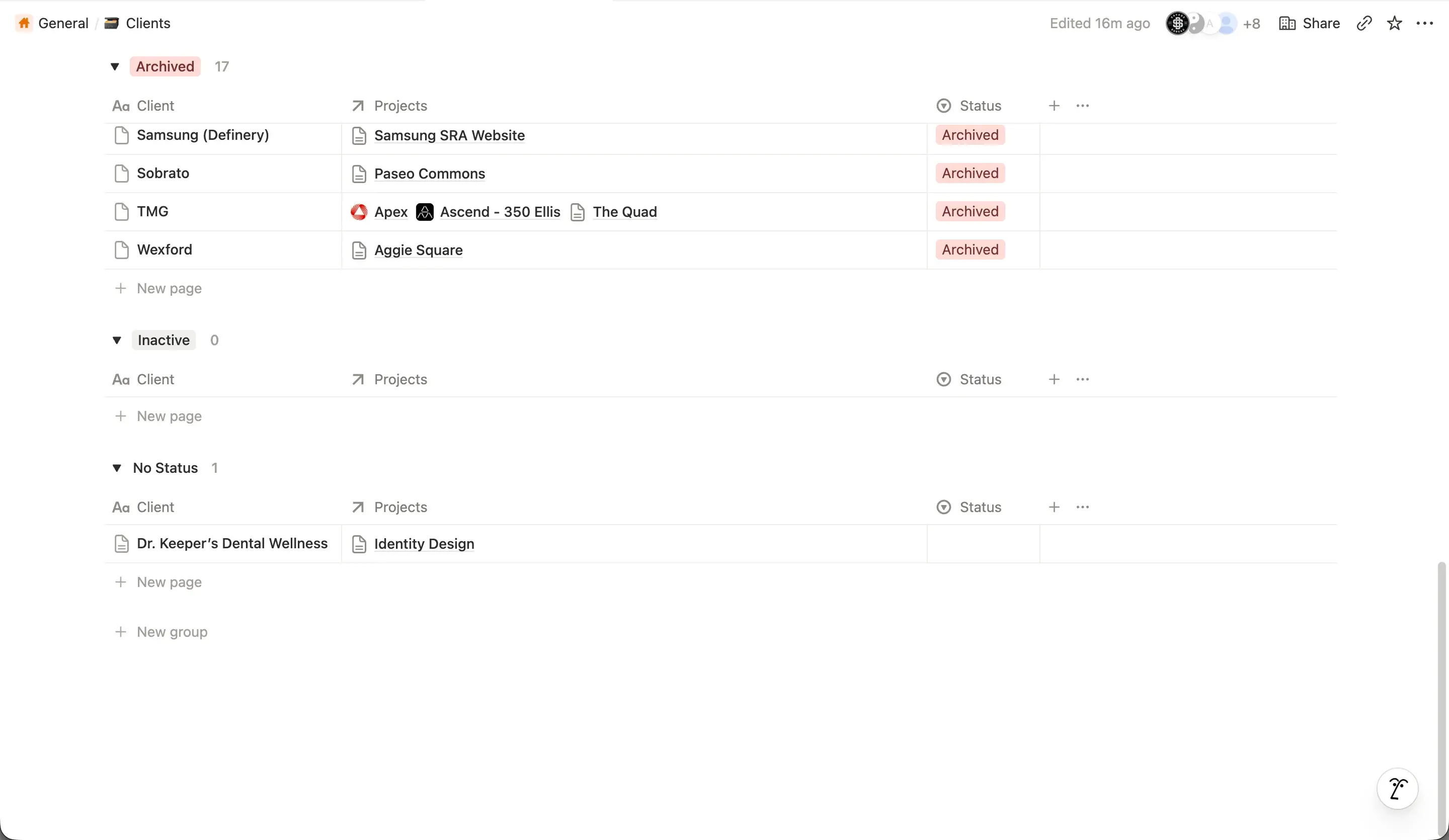
Every client, grouped by status and linked to their projects.
Project template
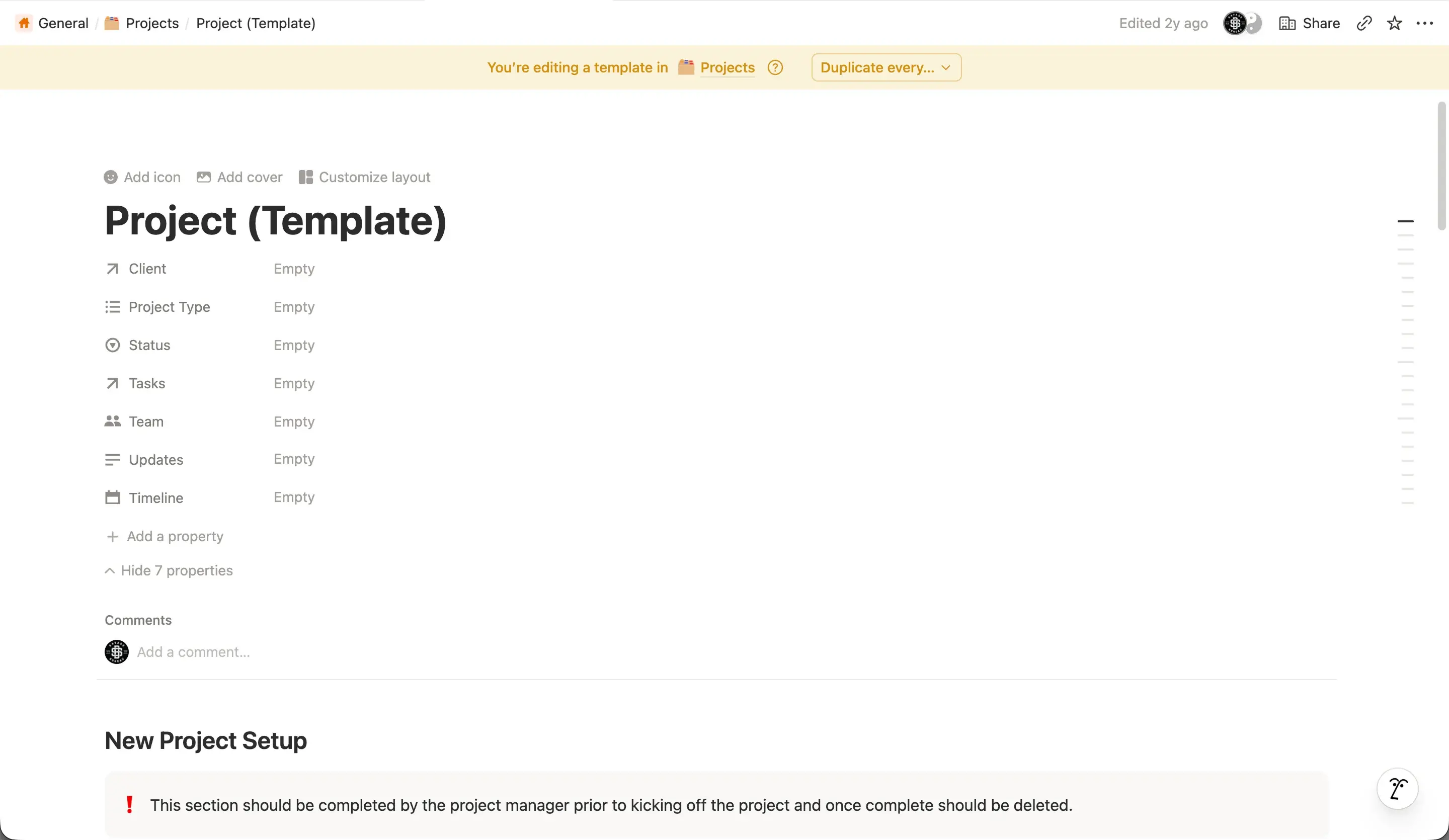
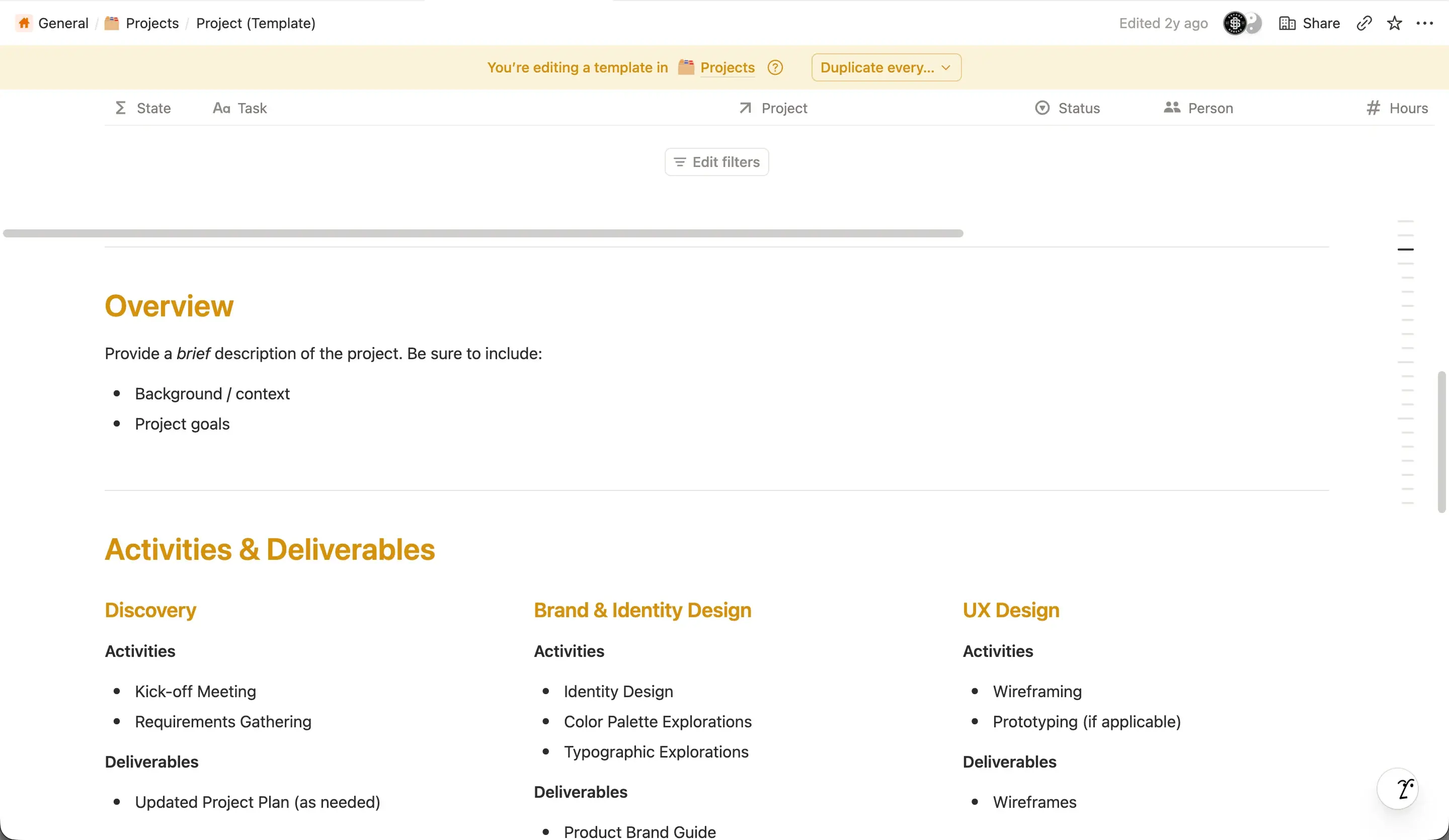
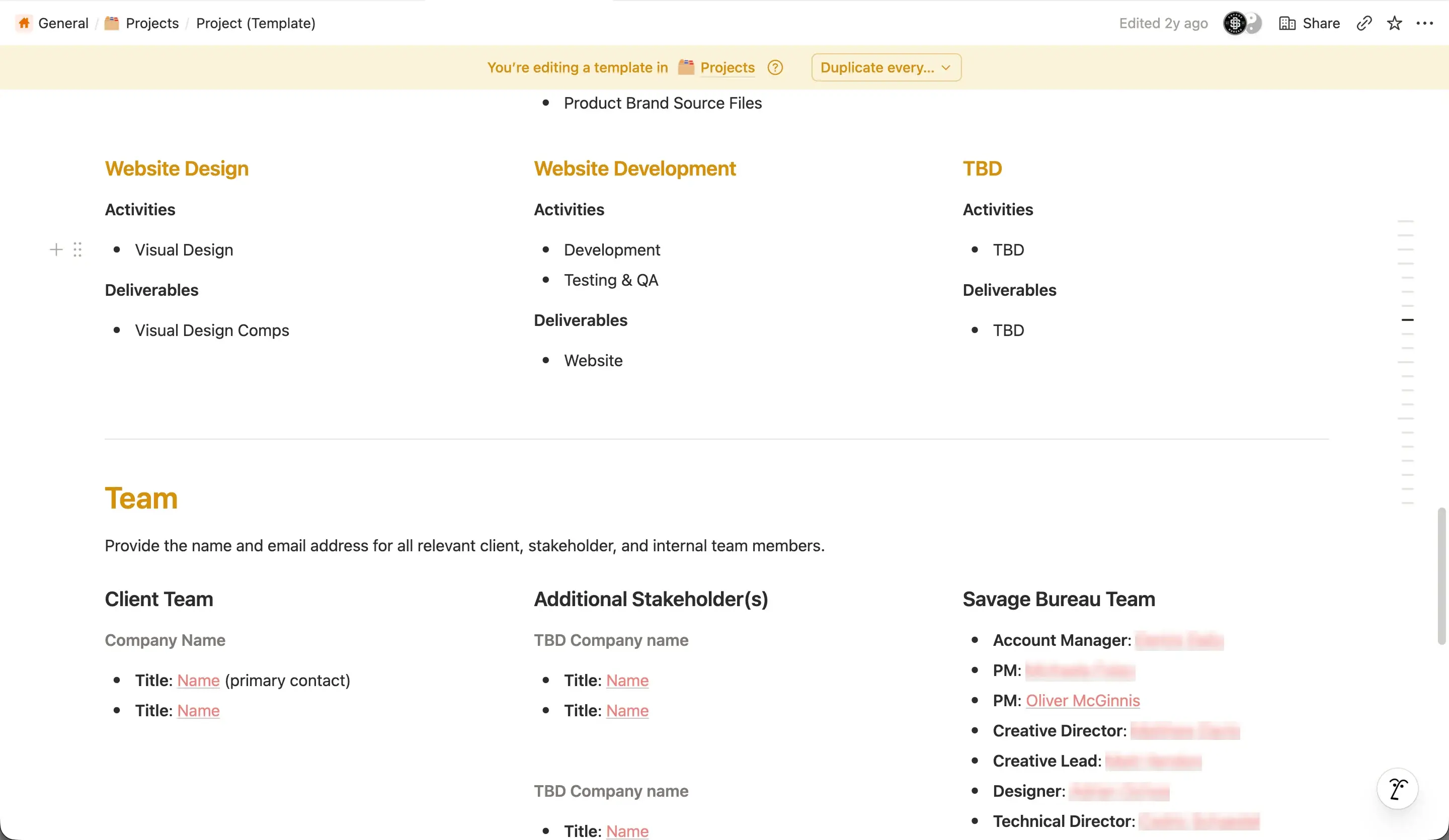
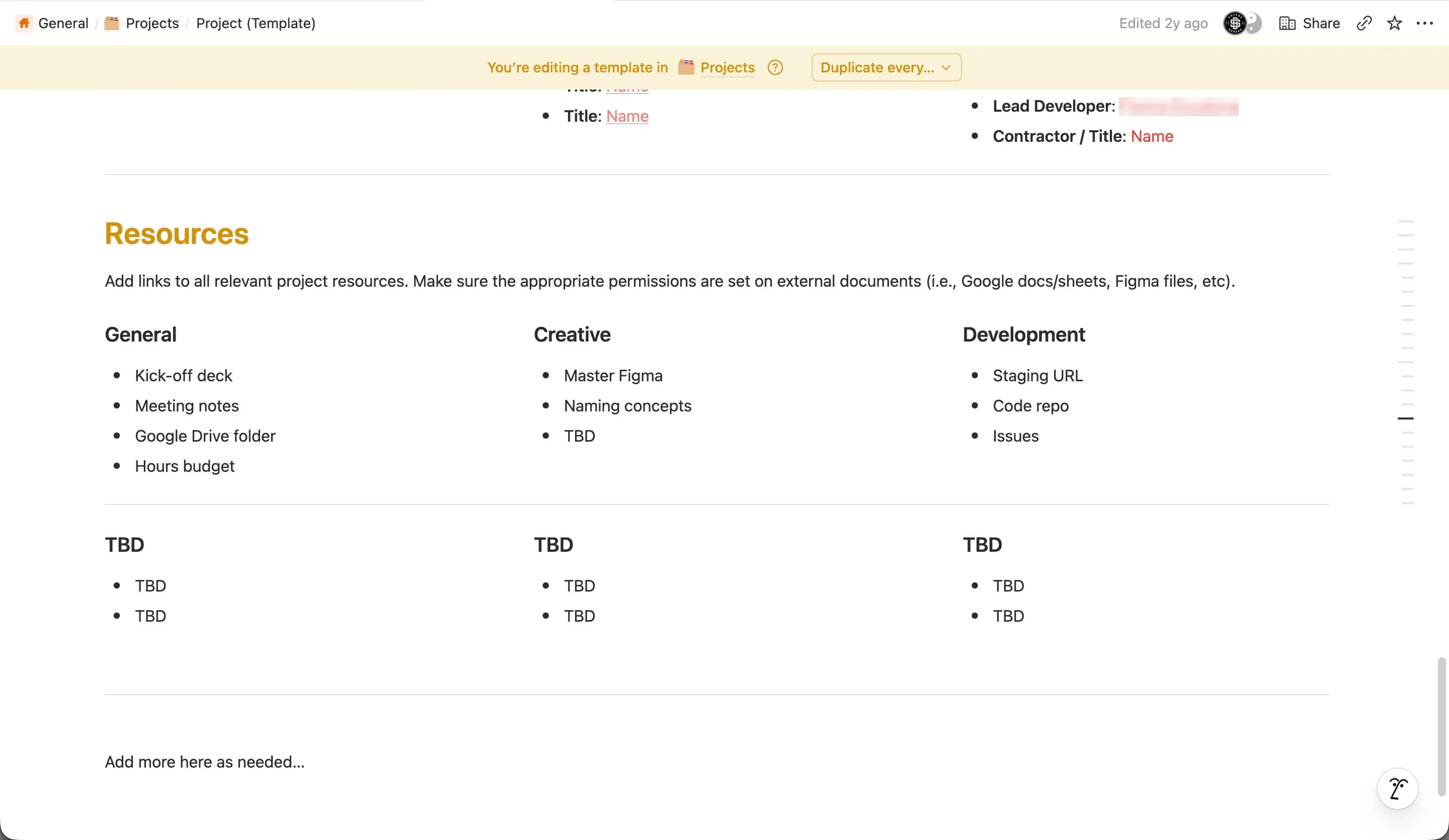
The kickoff template each PM filled out before a project started.
Projects database
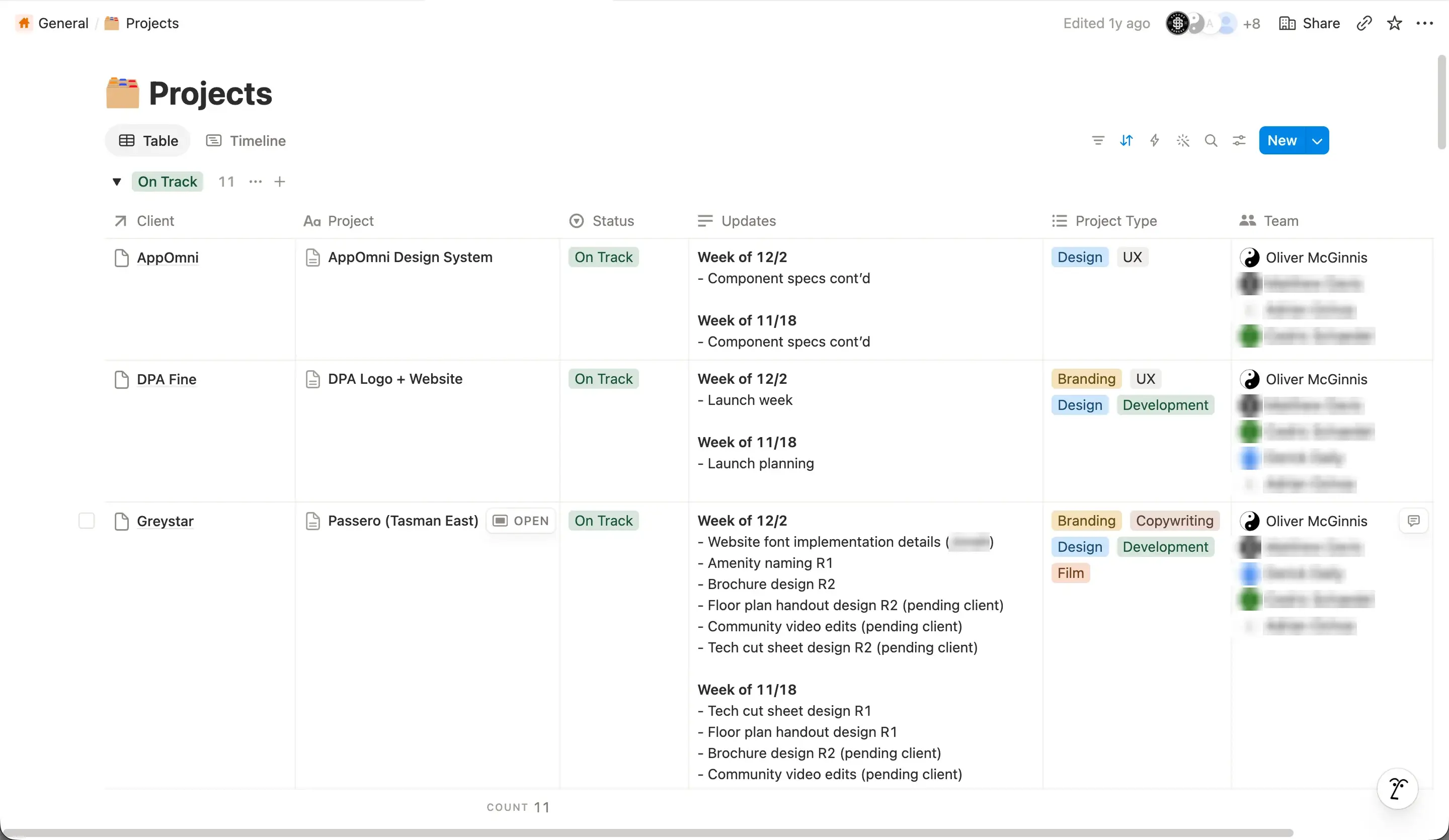
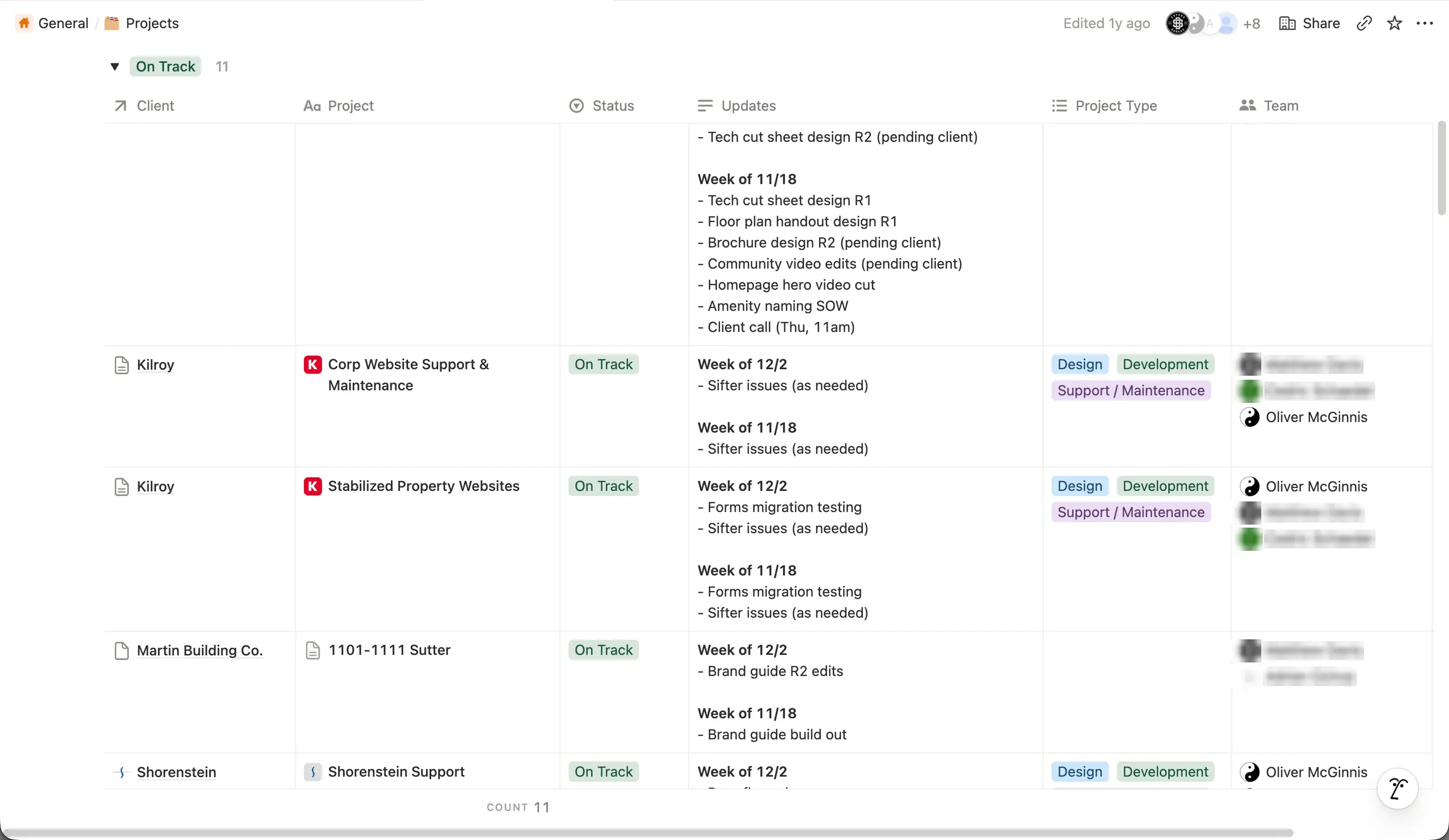
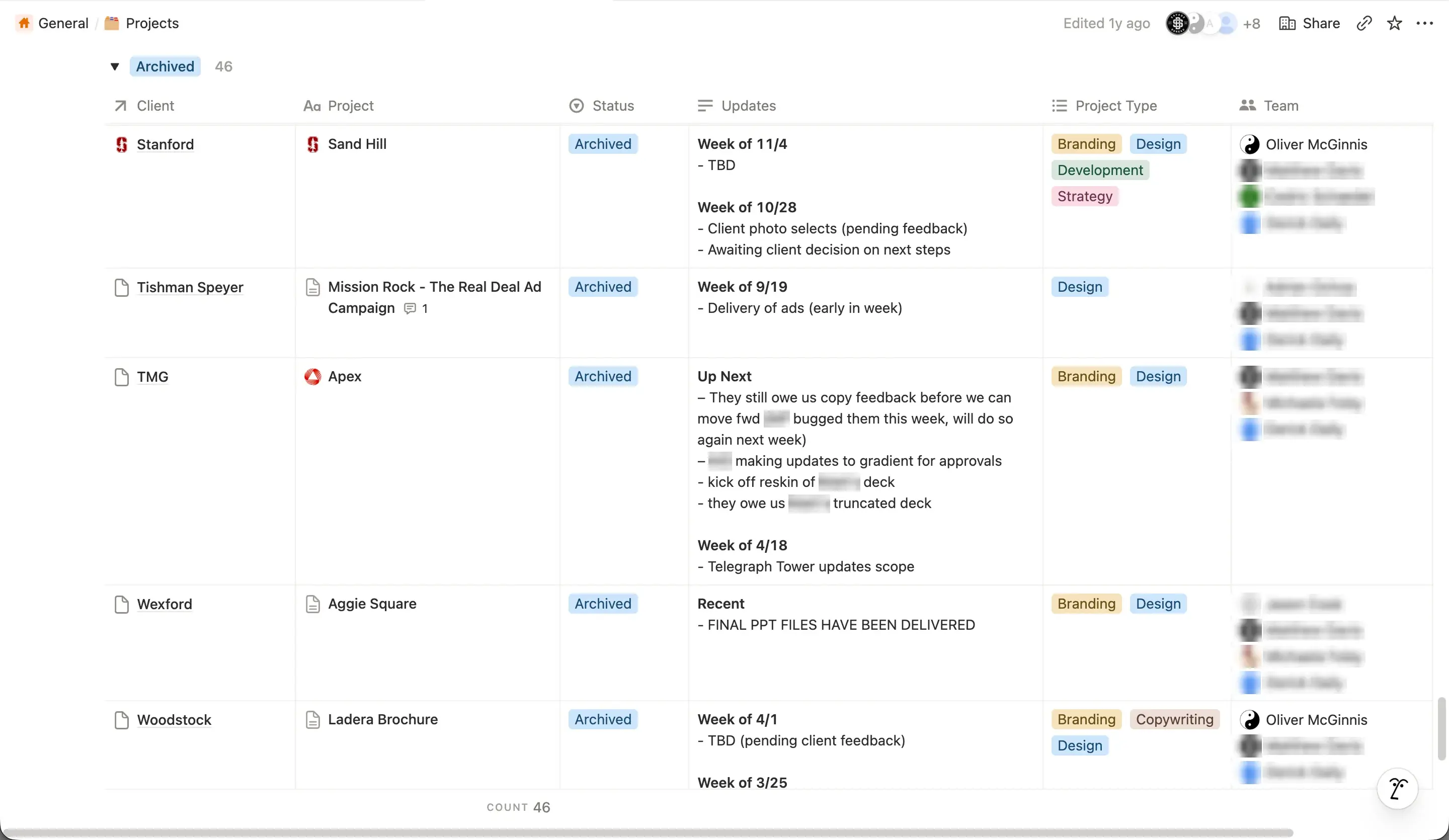
Weekly updates, project type, and team for every active project.
Tasks by Person
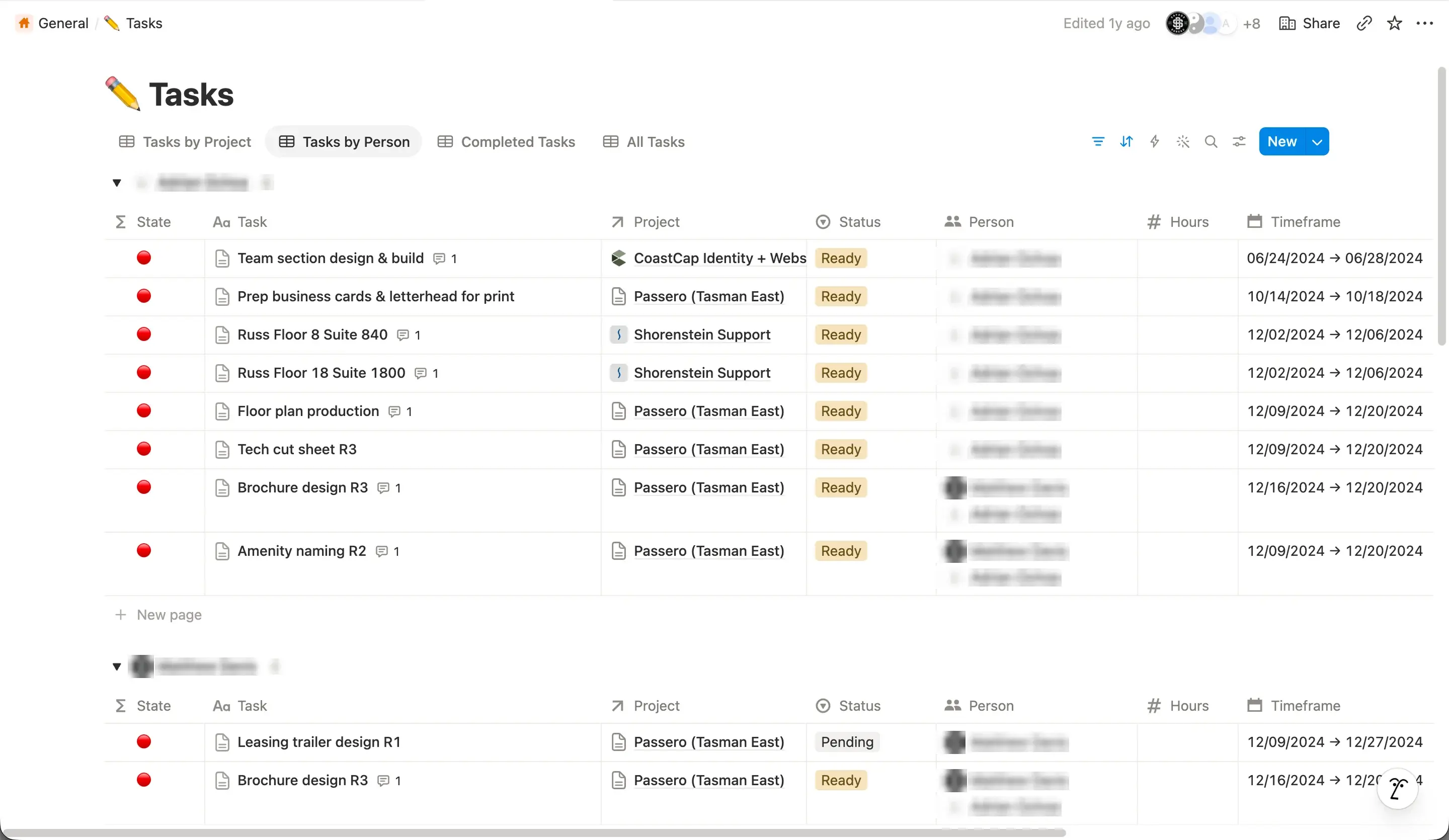
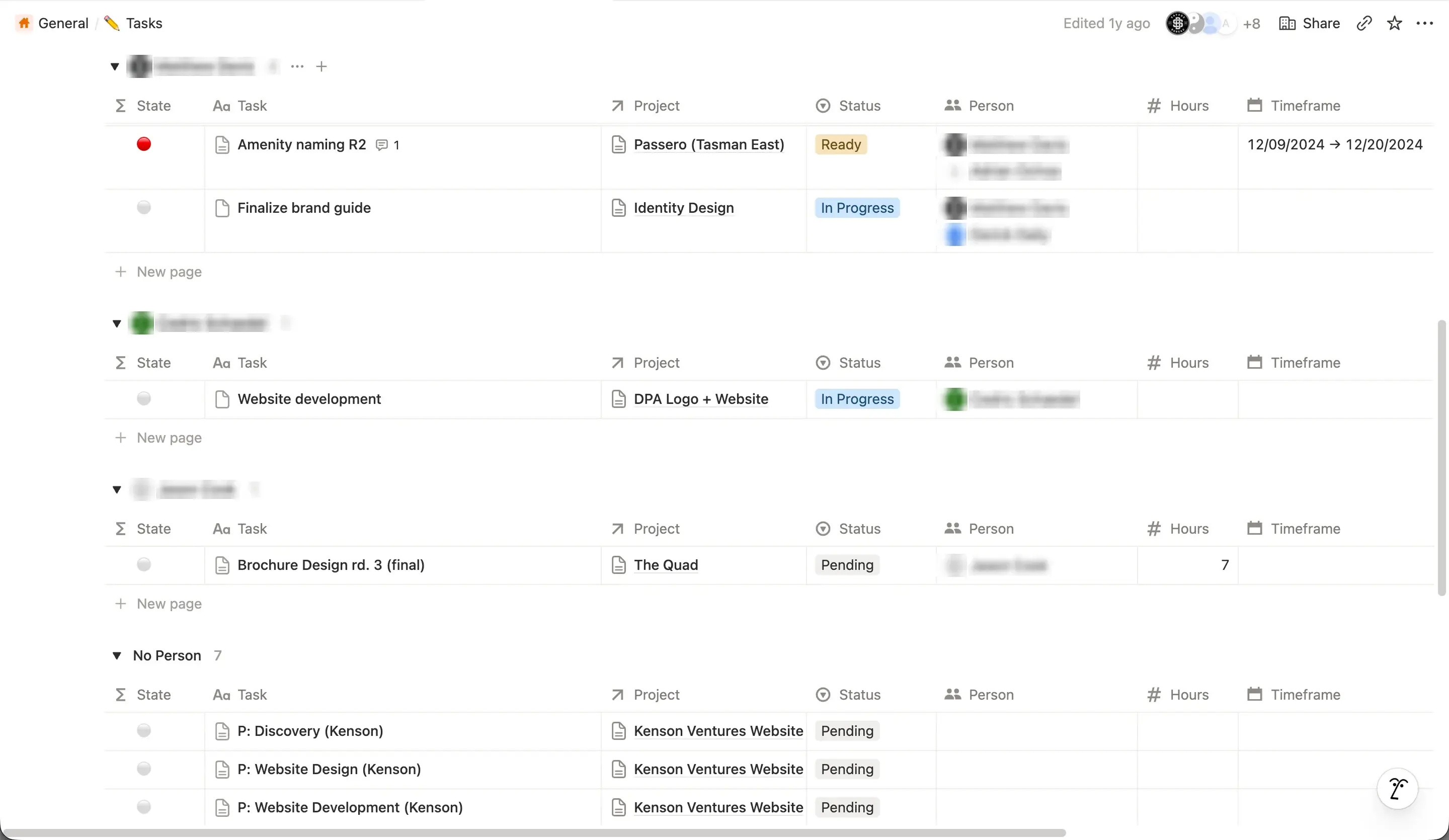
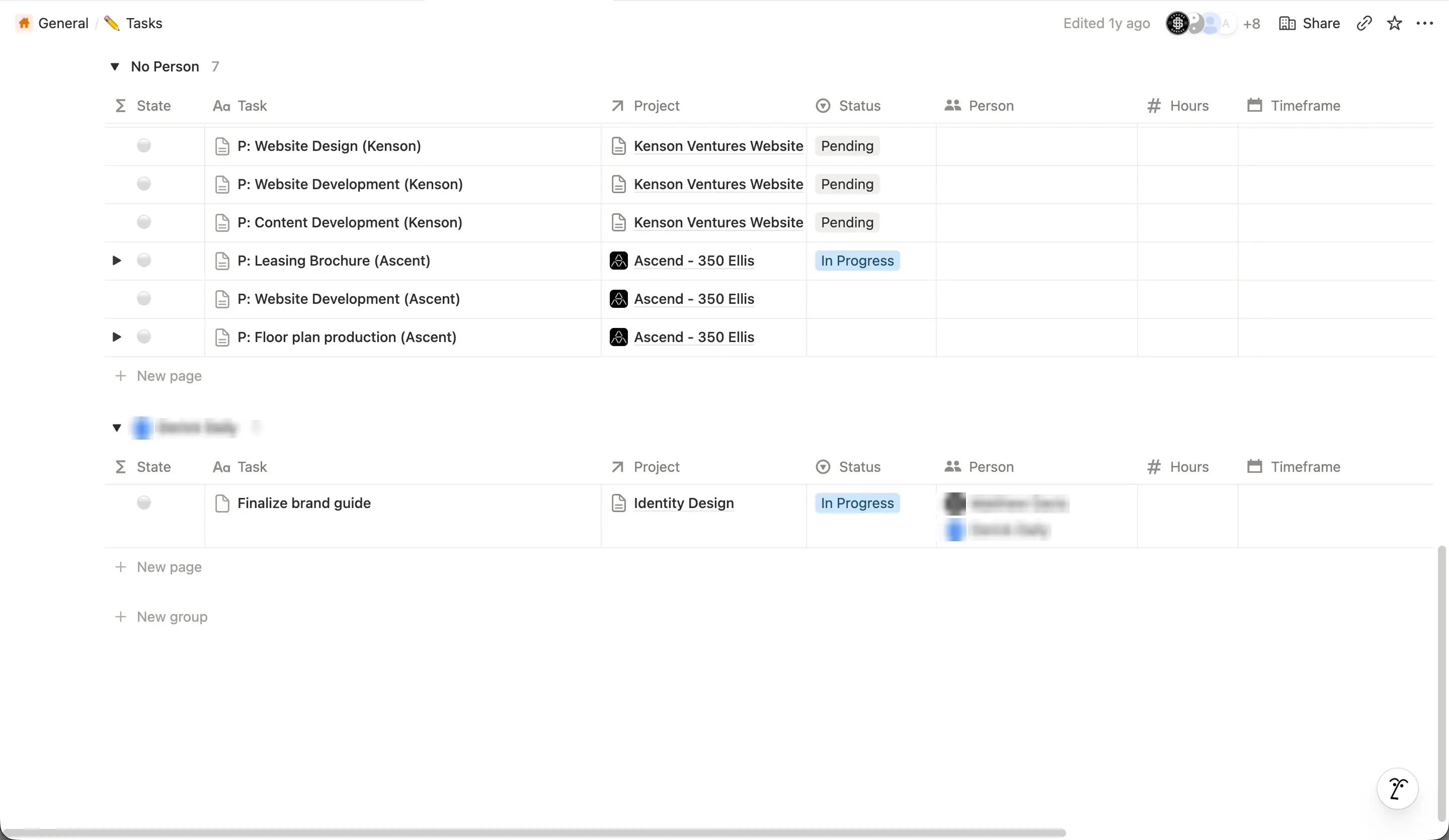
Each person's open tasks, with timeframes and status.
Tasks by Project
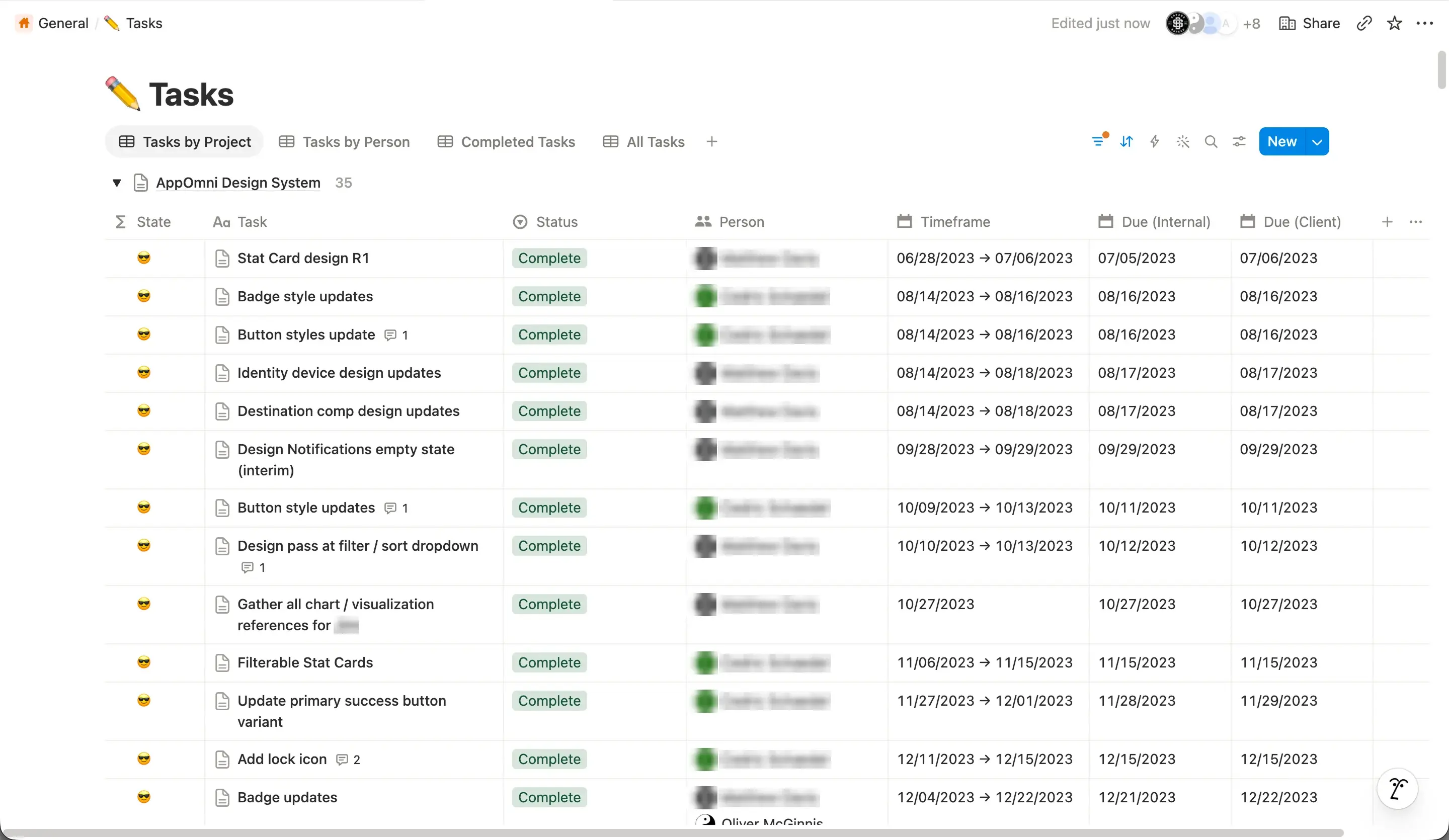
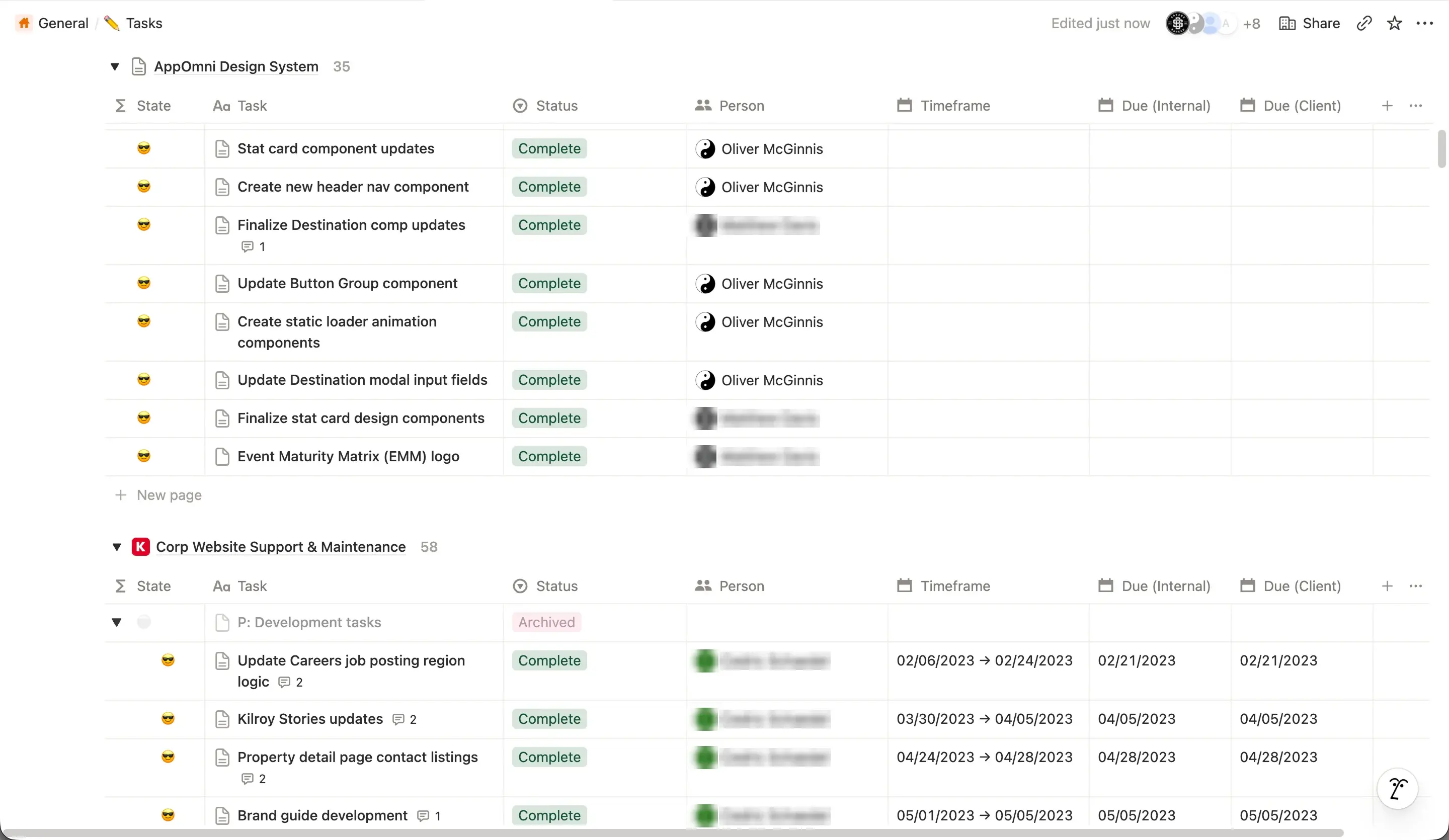
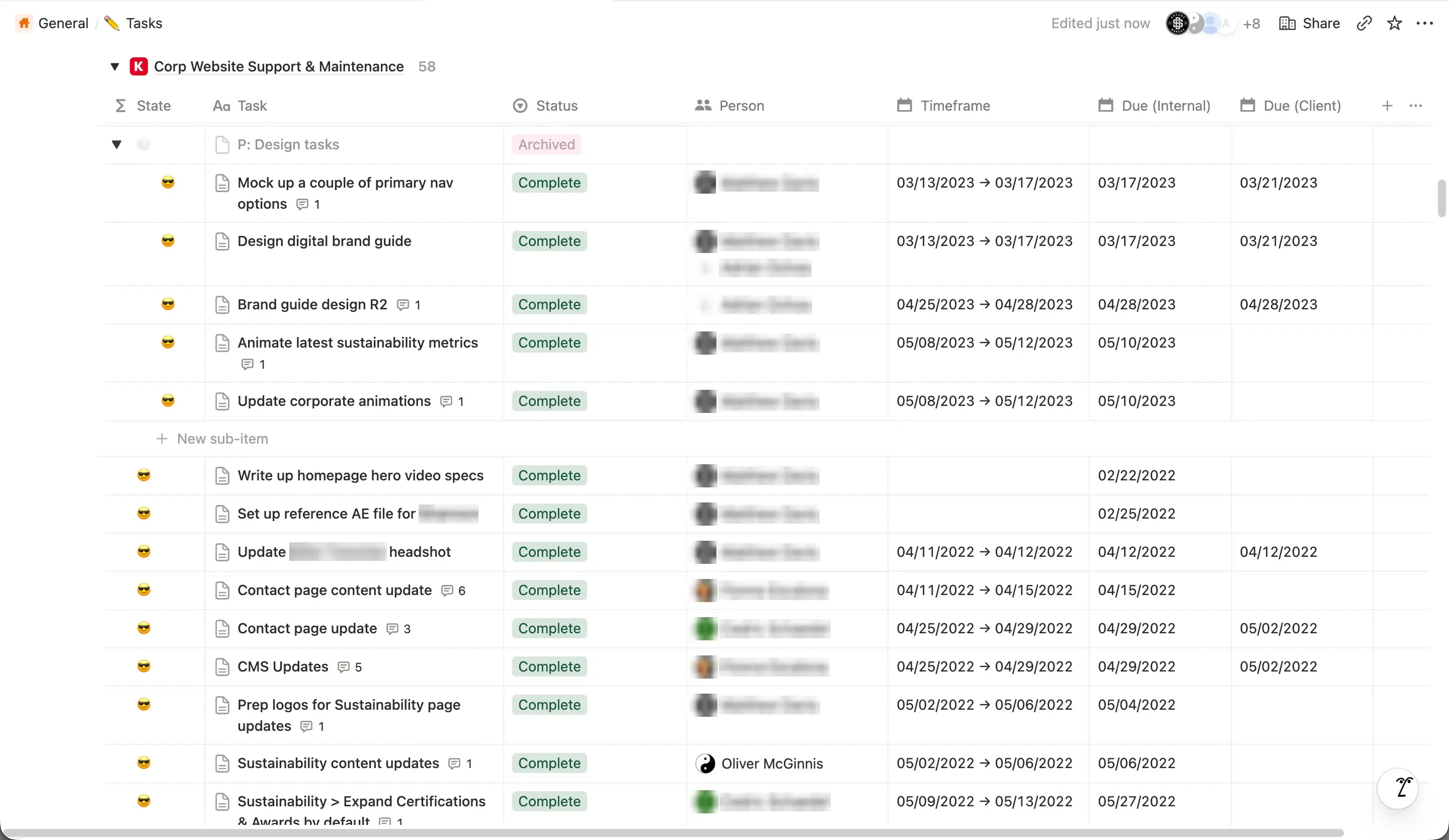
Tasks grouped by project, with internal and client due dates.